List of 2
 $ value   : num 4
 $ children:List of 4
  ..$ value   : num 2
  ..$ children:List of 4
  .. ..$ value   : num 10
  .. ..$ children: NULL
  .. ..$ value   : num 13
  .. ..$ children:List of 4
  .. .. ..$ value   : num 5
  .. .. ..$ children: NULL
  .. .. ..$ value   : num 6
  .. .. ..$ children: NULL
  ..$ value   : num 7
..$ children: NULLRecord-based data and List Processing
Complex Data structures
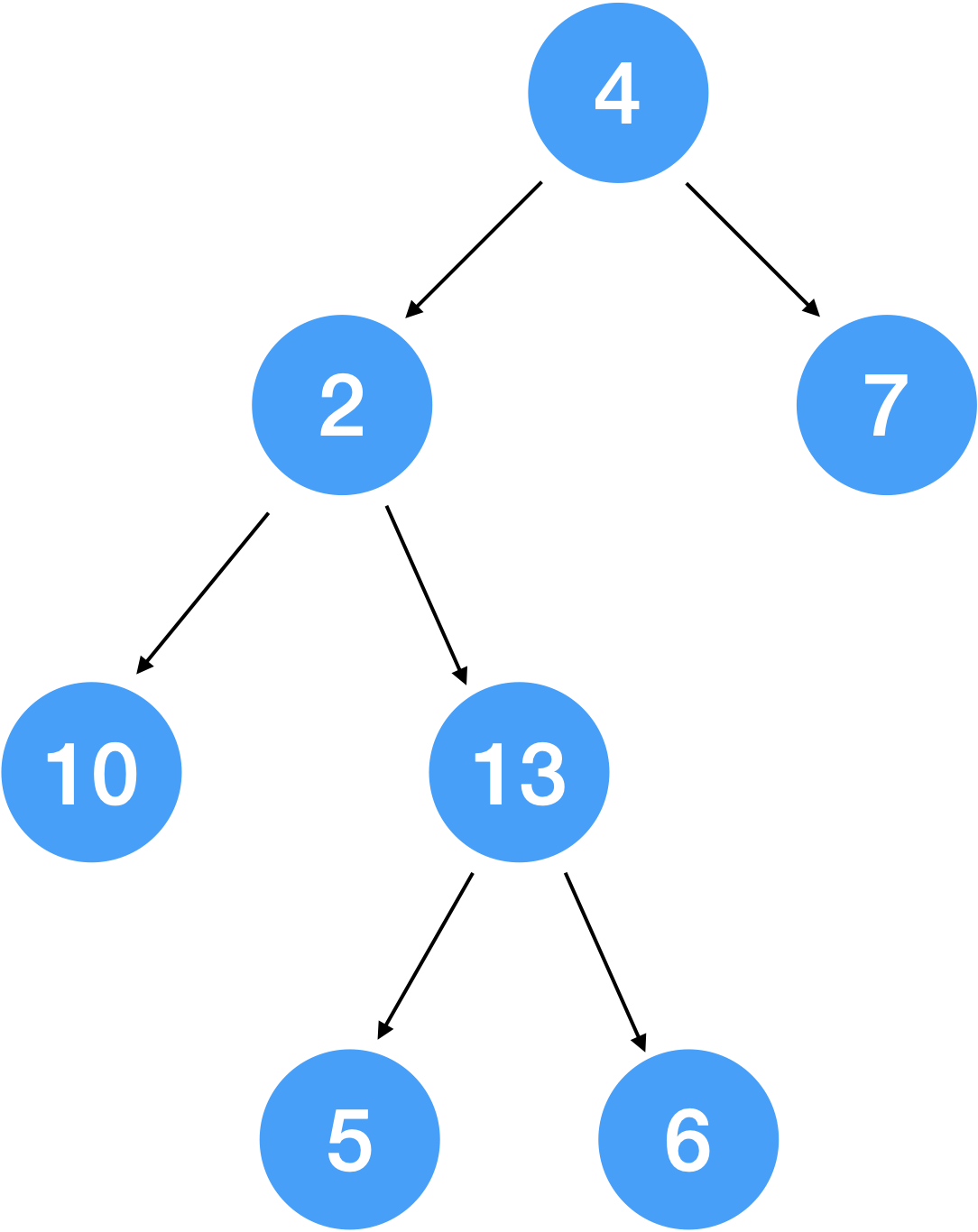
How would you encode this structure in python? how in R?
Lists
Lists are a superset of all data structures
- allow multiple data formats
- allow items that are lists
Lists are python’s basic data form:
[4, [2, [10, 13, [5, 6]], 7]]
(needs convention of [ starts children nodes and ] finishes list of children)
In R there are list objects list()
Tree in R
Trees
there are no native ‘tree’ objects in R or python (there are packages for sure), i.e. no standard implementation for trees
implementation as data frame:
# A tibble: 7 × 3
  node_id value children
    <int> <dbl> <list>
1       1     4 <dbl [2]>
2       2     2 <dbl [2]>
3       3     7 <NULL>
4       4    10 <NULL>
5       5    13 <dbl [2]>
6       6     5 <NULL>
7       7     6 <NULL>
Your Turn: Web Page Anatomy
Use the JSON specification at https://www.json.org/json-en.html to write out the tree
XML can be expressed as list
Coerce list to xml: as_xml_document
xml to list: xml2::as_list
We need to be able to navigate along lists
Working with lists
[accesses sub lists[[accesses elementsfor well-structured lists more powerful tools:
map(purrr)
Package purrr: https://purrr.tidyverse.org/reference/index.html
Example: Employee Data
Relational Overview
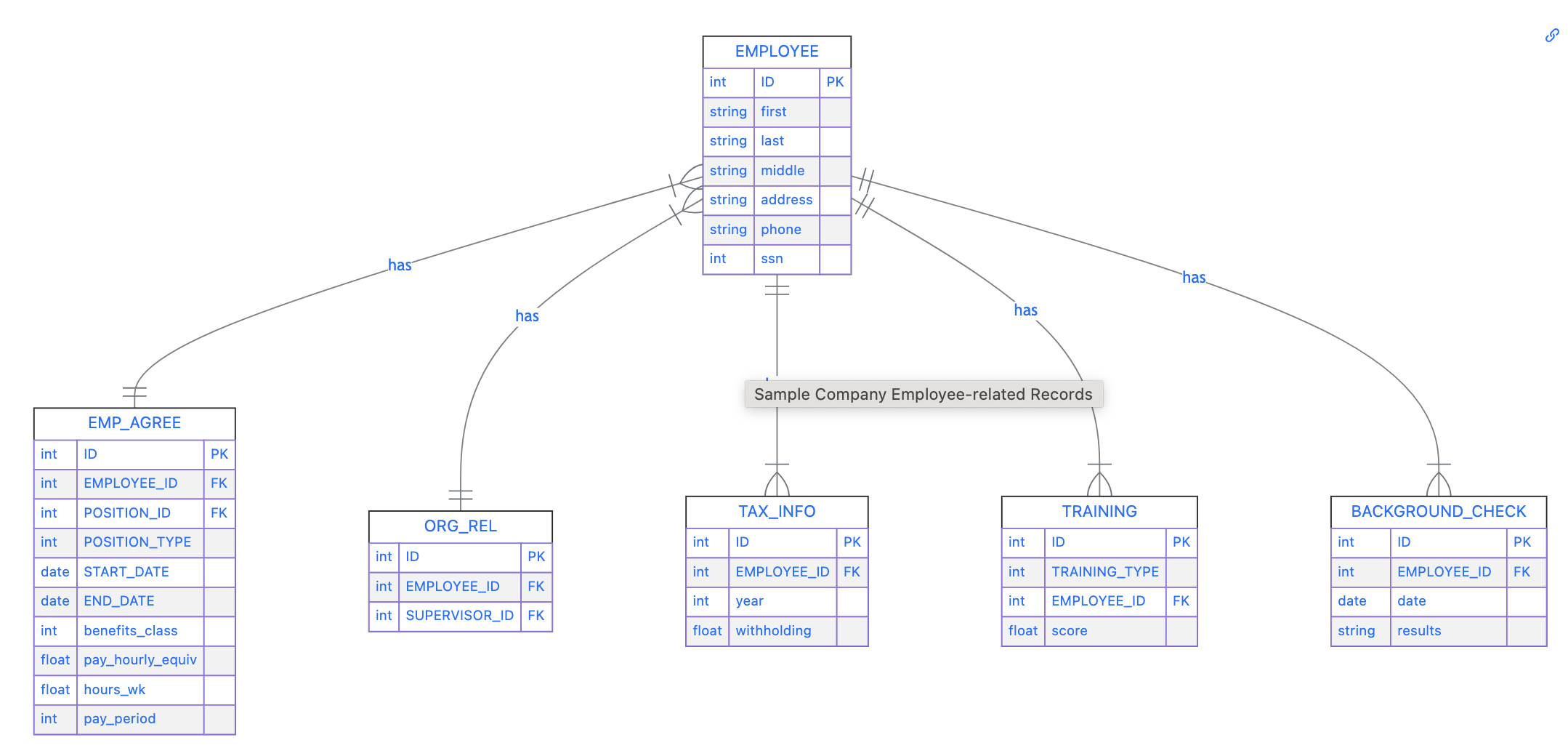
Identify the Structures - follow the hierarchy
xml_children recovers the children of an XML node
{xml_nodeset (6)}
[1] <EMPLOYEE_INFO>\n  <EMPLOYEE>\n    <ID>2824</ID>\n    <first>Michael</fir ...
[2] <BACKGROUND_CHECK>\n  <BACKGROUND_CHEC>\n    <ID>39089</ID>\n    <EMPLOYE ...
[3] <TAX_INFO>\n  <TAX_INF>\n    <ID>93941</ID>\n    <EMPLOYEE_ID>2824</EMPLO ...
[4] <TRAINING>\n  <TRAININ>\n    <ID>67510</ID>\n    <TRAINING_TYPE>3</TRAINI ...
[5] <EMP_AGREE>\n  <EMP_AGRE>\n    <ID>14107</ID>\n    <EMPLOYEE_ID>2824</EMP ...
[6] <ORG_REL>\n  <ORG_RE>\n    <ID>80344</ID>\n    <EMPLOYEE_ID>2824</EMPLOYE ...
Employee Data
{xml_node}
<EMPLOYEE>
[1] <ID>2824</ID>
[2] <first>Michael</first>
[3] <last>Phillips</last>
[4] <middle>E</middle>
[5] <address>341 Bonilla Extensions\nLake Jacktown, VA 72058</address>
[6] <phone>+1-701-028-0259x700</phone>
[7] <ssn>821097324</ssn>
Get all elements of one record
Your Turn
How do we need to modify the function make_row so that we can extract data for the background check?
Is your solution applicable to all the tables of the Employee database?
Solution
In practice we need to use some error handling